

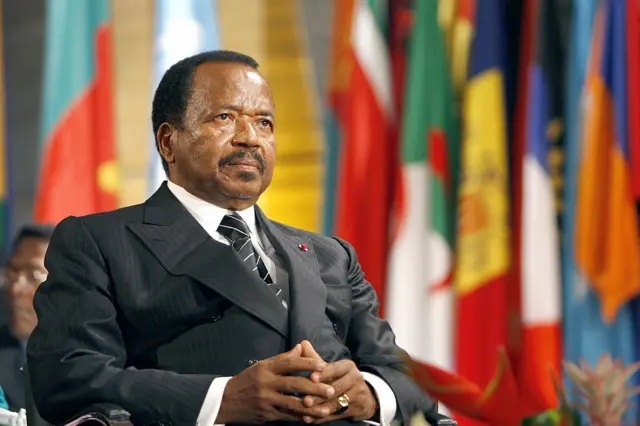
Barrister Afanyu Njobara
Forming a New Government or Cabinet reshuffle is a complex issue in Cameroon’s political and constitutional context. Here is why.
First there is no strict constitutional deadline, but there is a strong political imperative to form a government quickly. A new government must be formed after a presidential election, as the previous government is considered to have, or expected to resigned . However, the timing is at the sole discretion of the President, who can take weeks or even months, as history has shown.
Yes, a New Government MUST Be Formed.
Article 11(6) of the 1996 Constitution (as amended) gives us the premises for this. It states that “the Prime Minister, the Members of Government… shall remain in office until the appointment of the new Government.”
This means the incumbent government is in a caretaker capacity from the moment a new President is sworn in and in this case that was last November 7. 2025. As a care taker government, their primary role is to handle day-to-day administration until the new President appoints his own team or in our case a new team. Forming a new government is therefore a constitutional necessity to end this caretaker period.
The Constitution however does not specify a timeframe. The President can take as long as he deems necessary. This period is used for critical political negotiations and other considerations:
The ruling CPDM party has powerful factions, regional blocs, and vested interests. The President uses this delay to negotiate positions, balance power, and reward loyalty.
The time may be used to persuade figures from other parties to join a “broad-based” government, a common strategy in Cameroon as could be seen with opposition members in government like Issac Tchiroma, Bello Bouba, Jean De Dieu Momo and others.
Delaying the announcements also helps manage the intense lobbying and pressure from various constituencies, factions and tribes that are vying for positions.
The President and his inner circle also use the time to evaluate potential ministers’ their loyalty, competence, and political weight.
This may all be conjunctures, or limited only to one man , Paul Biya, not many are listening now that may have experience such before his coming into power.
After Mr Paul Biya’s re-elections, government formations have often taken 4 to 6 weeks. For example, after the 2018 election, the new government was announced on January 4, 2019, roughly 7 weeks after the inauguration.
This establishes a political tradition, even in the absence of a legal deadline.
The question may may ask is if it’s the entire government that is change? As the name implies, it’s a reshuffle. A “new government” in this context means a government appointed by and serving at the pleasure of the newly inaugurated President. This ypically involves:
– A new Prime Minister (often appointed very soon after inauguration as the President’s main executive assistant).
– A significant reshuffle where Many ministers from the previous government may be retained, but they are technically re-appointed. Others may be moved to different portfolios or replaced.
Mixing change and continuity. This mix aims to provide stability (by keeping experienced hands in key ministries) while signaling a new direction or fulfilling political promises with new appointees.
While legally unbound, politically it is wise to:
– Appoint a Prime Minister Quickly: This shows decisive leadership and provides a point person to manage the transition.
– Form a Core Government within 2-4 Weeks: Key ministries (Finance, Defense, Territorial Administration, External Relations, Justice) should be filled to assure domestic and international partners of stability and policy direction.
– Avoid Excessive Delay: Protracted uncertainty can lead to administrative paralysis, speculation, and a loss of reform momentum. It can be perceived as indecisiveness or deep internal conflict.
– Use the Announcement Strategically: The composition of the government is the first major signal of the President’s priorities (e.g., technocracy vs. politics, regional balance, gender inclusion, reform intent).
For a newly elected President in Cameroon, forming a government is a mandatory first act of executive authority with no fixed timeline. The process is a critical political event in itself, reflecting the power balances within the ruling coalition and setting the tone for the incoming term. While the President has the legal right to deliberate, swift and strategic action is crucial to capitalize on the electoral mandate, establish authority, and begin the work of governance.

