
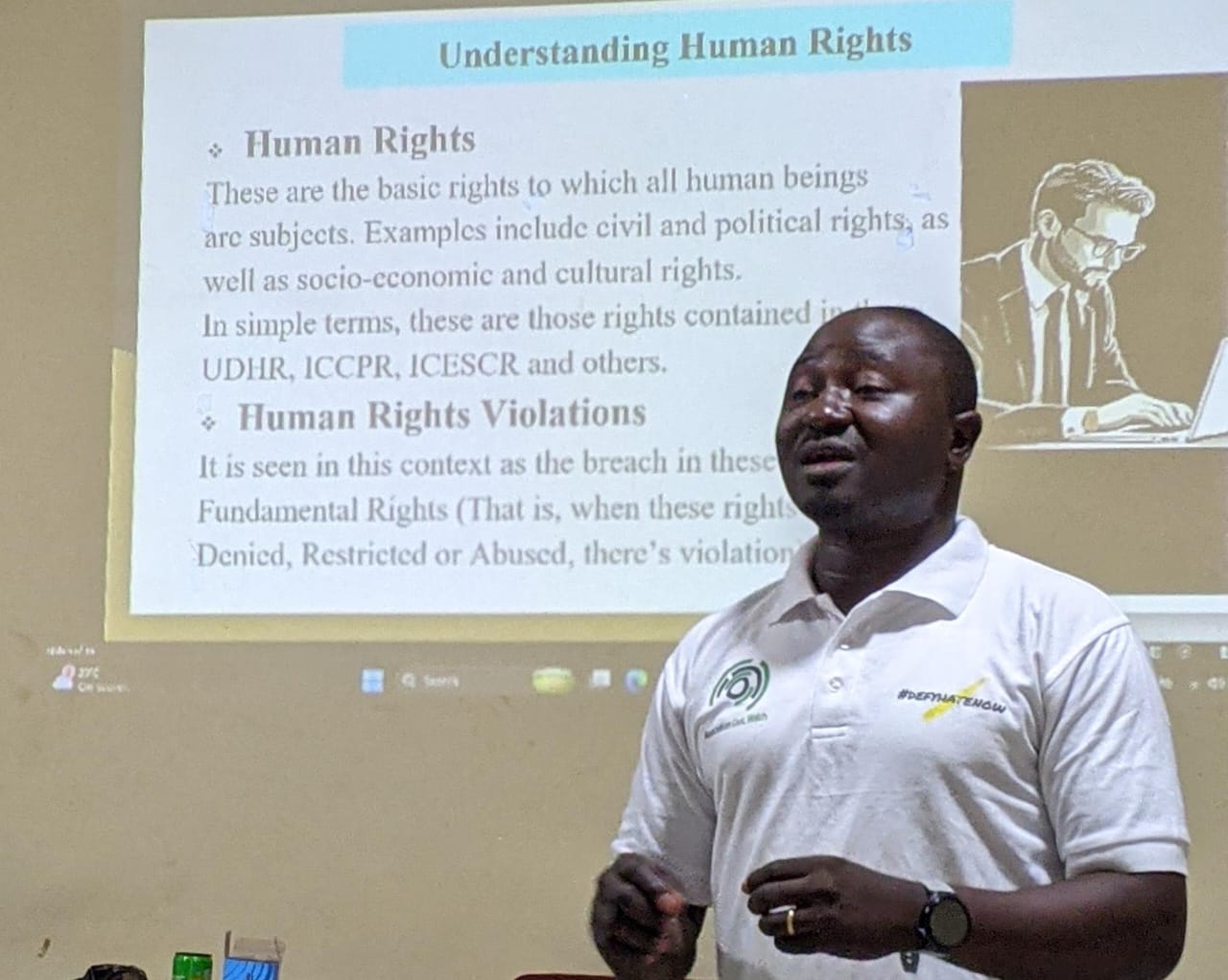

Journalists have been encouraged to know their human rights and adopt safer ways of working, particularly when covering sensitive stories involving violence, security forces and state officials.
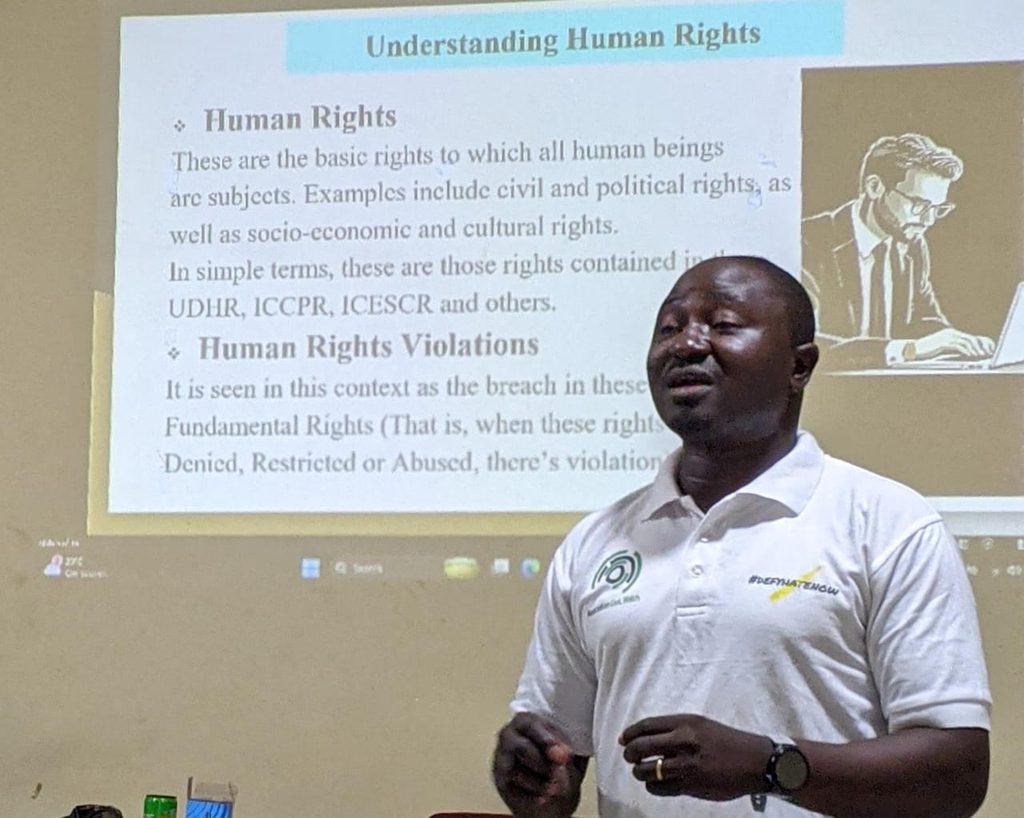
The advice was given Friday, August 14, 2026, during a training on “Understanding and Documenting Human Rights Violations Against Journalists” organized by Civic Watch.
The session examined common violations faced by journalists in Sub-Saharan Africa, including arbitrary arrest and detention, physical violence, restrictions on reporting, media suspensions, digital surveillance, and the misuse of cybercrime, defamation and national security laws.
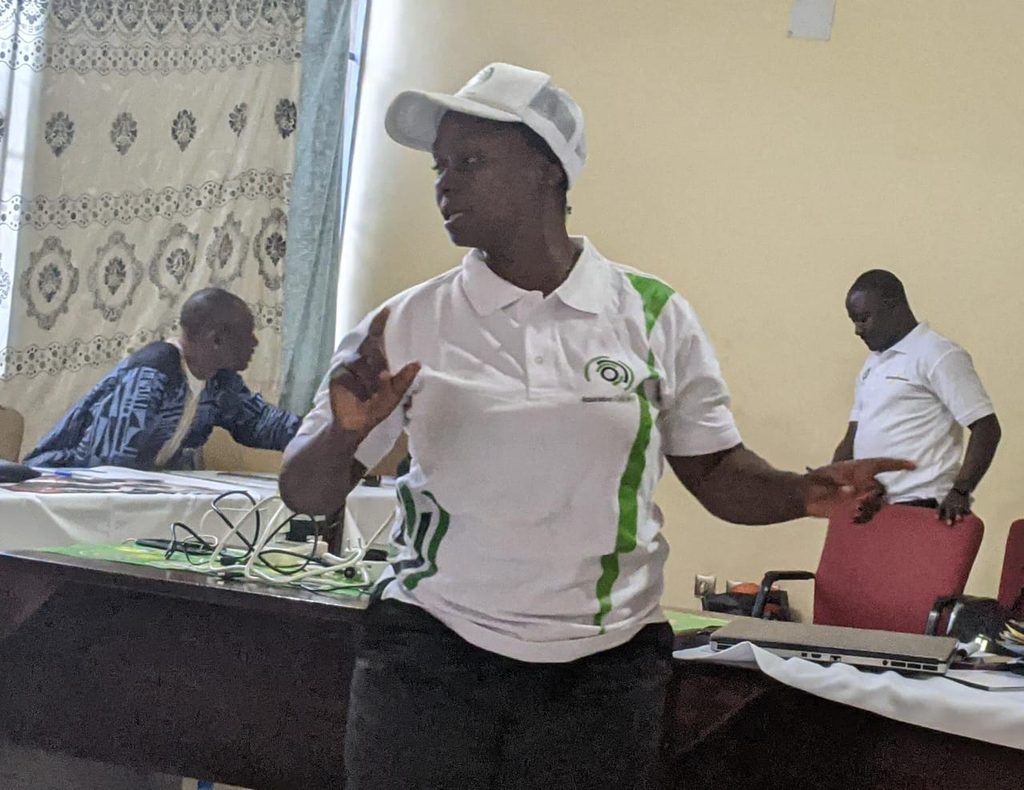
Participants were trained on how to properly document rights violations by recording who, what, when, where and how an incident occurred. They were also advised to verify relevant laws, preserve digital evidence and maintain incident logs for threats or attacks.
The training emphasized the principle of “report smarter, not braver,” urging journalists to assess risks before embarking on assignments, especially when reporting from volatile environments or dealing with security personnel and public officials.
Participants also shared field experiences and discussed practical and professional approaches to handling difficult situations while protecting themselves and maintaining journalistic standards.
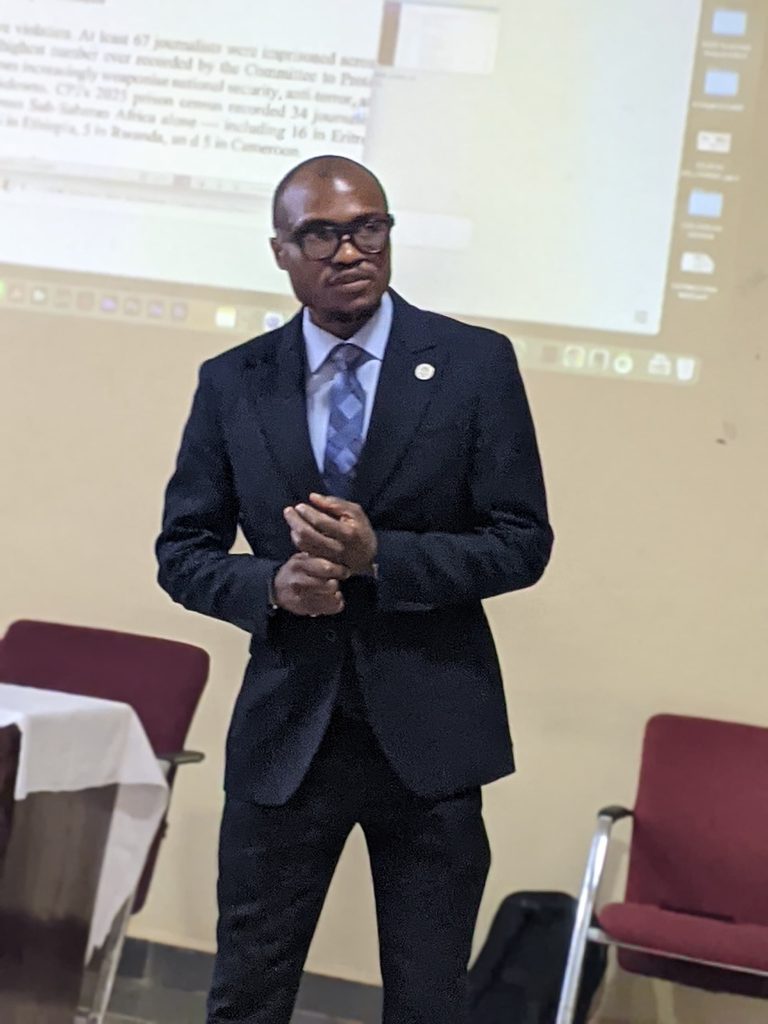
The Speakers stressed that in today’s increasingly digital media environment, responsible journalism requires not only accurate reporting and documentation of human rights violations, but also greater attention to the safety and protection of those gathering and disseminating information.
The training is expected to help journalists make informed decisions in the field while strengthening their understanding of their rights and responsibilities as media professionals.
By Anyam Yvette in Bamenda
