

By Menyam Sibelle
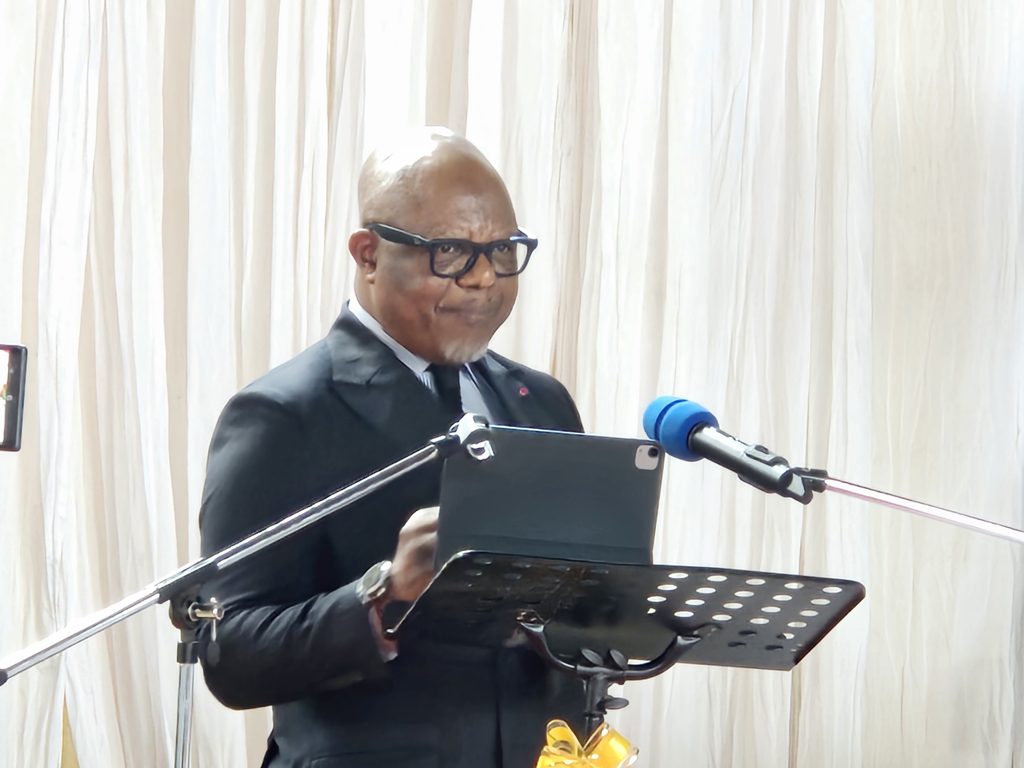
Prime Minister and Head of Government, Chief Dr Joseph Dion Ngute, has called on the population of the North-West Region to take collective responsibility for ending the ongoing crisis, insisting that dialogue remains the way forward towards restoring lasting peace.
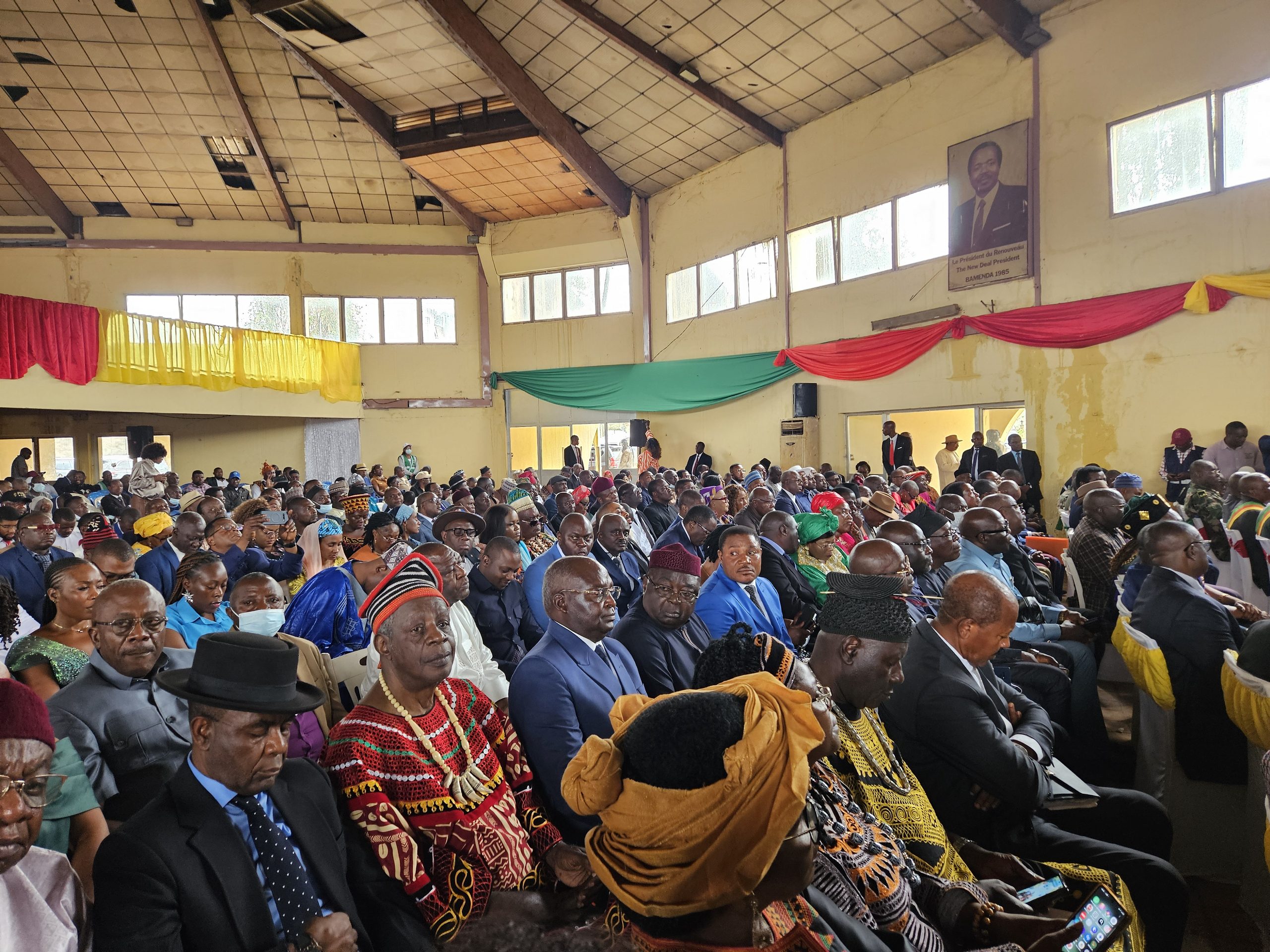
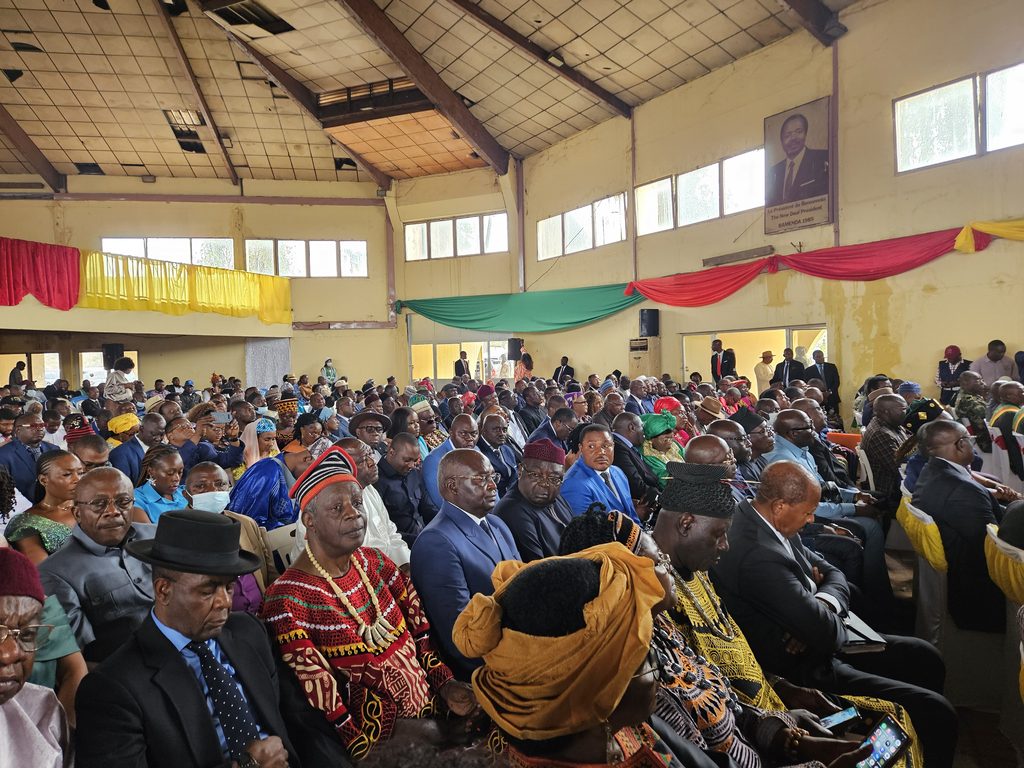
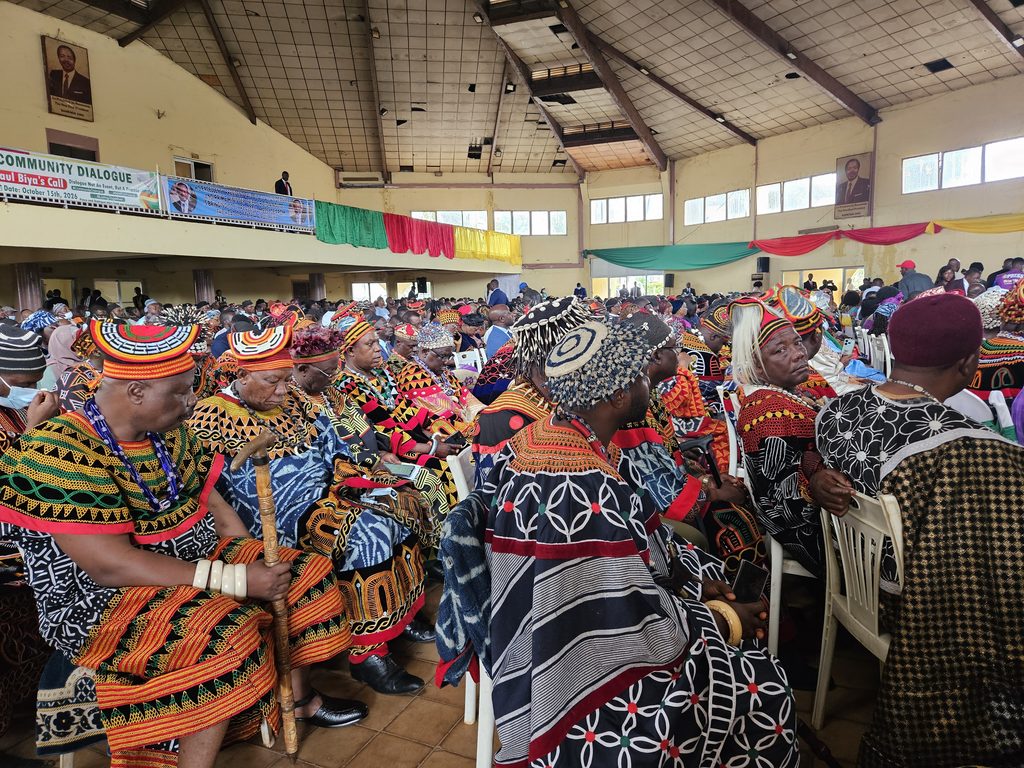
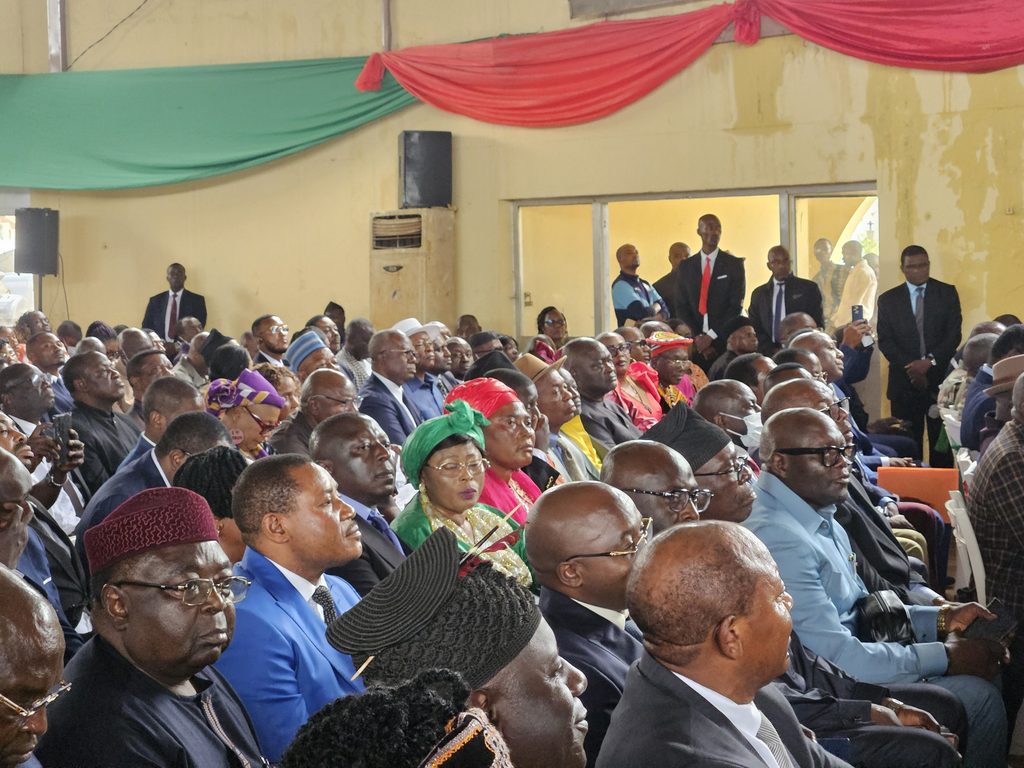
He was speaking on Thursday, October 15, 2026 at the Bamenda Congress Hall during the launch of the community dialogue initiative in the North-West Region, bringing together traditional rulers, religious authorities, civil society representatives, women, youths, economic operators and other community stakeholders.
The event, attended by North-West Governor Adolphe Lele Lafrique and other administrative and regional authorities, followed a visit by the Prime Minister to major development projects underway in the region. It is intended to bring peace discussions closer to the population and encourage community actors to engage armed separatist fighters to lay down their weapons.
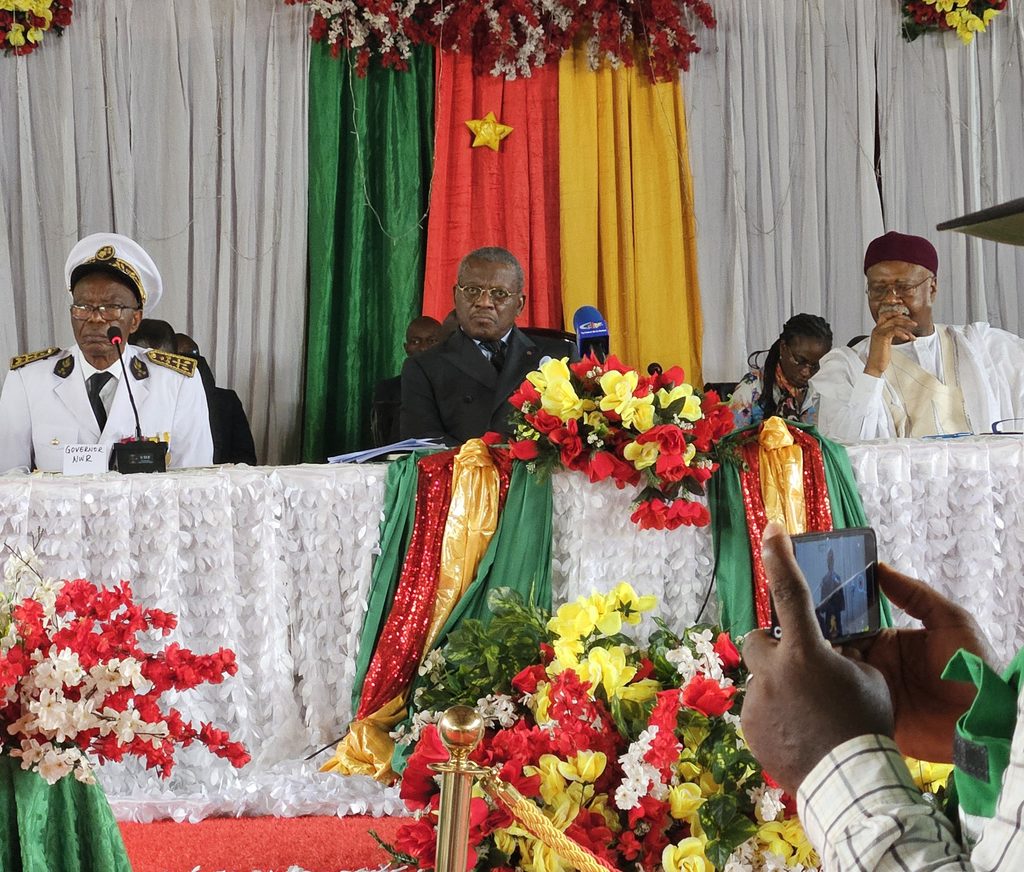
Governor Adolphe Lele Lafrique in his address took participants down memory lane, recalling how what began as verbal agitation by some personalities degenerated into violent actions against the State and its institutions from 2017.
He cited violent demonstrations, school closures, attacks on civilians and security forces, and other atrocities that have continued to affect the population.
Despite the insecurity, the Governor said the Government chose dialogue, beginning with regional consultations in Bamenda before the Major National Dialogue convened by the Head of State in Yaounde from September 30 to October 4, 2019.
He noted that the national exercise brought together stakeholders from across the country, particularly from the North-West and South-West Regions, to discuss solutions to the crisis. However, he said the earlier dialogue with some promoters of the crisis in Bamenda failed because their demands challenged the unity and indivisibility of Cameroon.
The Governor identified the special status granted to the North-West and South-West Regions, in accordance with the Constitution, as one of the major outcomes of the Major National Dialogue. He also commended religious institutions for their contribution to peacebuilding, noting that their role was evident during the Pope’s visit to Bamenda.
On the economic front, he highlighted progress in road reconstruction, noting that improved road access was enabling farmers to transport their produce to local markets.
He described the Bamenda Ring Road as a major development priority and reported satisfactory execution rates on several sections. According to the figures he presented, work on the Ndu and Kambe sections was approaching 100 percentage completion, while Messaje stood at 99 percentage and Kumbo at 65 percentage, with work ongoing.
He added that the population was happy with the current state of the Matazem–Bamenda stretch of road following the recent visit to the project sites, while expressing hope that more farm-to-market roads would be opened.
On security, the Governor regretted the persistence of Monday and seasonal ghost towns, recurrent attacks, kidnappings and other atrocities attributed to armed separatist fighters. He praised security forces for their professionalism despite the difficulties they face and acknowledged the contributions of traditional rulers, religious leaders, civil society and the population.
However, he maintained that these efforts could be more effective if inhabitants united across political, religious and tribal differences.
The Governor urged residents to assist security officers in addressing security concerns, reminding them of the adage, “You see something, you say something.” He called on participants to return to their communities and work with local actors to restore lasting peace.
He also expressed concern over the prevalence of unauthorised schools in some communities, warning that their activities could undermine the functioning of recognised public schools established to provide affordable education to children from less privileged families.
In his keynote address, Prime Minister Joseph Dion Ngute thanked the Governor, community stakeholders and participants for their presence and commitment to the peace process.
Reflecting on the suffering endured by the region for close to a decade, he acknowledged the role of the military in stabilising the country but stressed that security forces alone could not end the crisis.
He observed that the military could not go into every home to bring out separatist fighters, insisting that the population had a critical role to play.
“The ultimate responsibility to end this nuisance rests on our shoulders,” he said, warning that if people remained nonchalant, they would continue to suffer year after year.
Reiterating his belief that the crisis would eventually come to an end, the Prime Minister said “the crisis will die a natural death,
even the wildest fire burns itself out,” he declared, adding that the people had the capacity to stop the crisis.
He described those invited to the dialogue as key and proximate actors who could reach out to armed separatist fighters and persuade them to abandon violence. He argued that the continued fighting was harming the very families and communities the fighters claimed to represent.
A significant moment at the event was the presentation of separatist fighters who had surrendered their weapons and entered the Disarmament, Demobilisation and Reintegration Centre (DDRC).
Using their example, the Prime Minister urged traditional rulers, elites and other community leaders to encourage those still in the bush to surrender, assuring them that they should not fear being locked up or harmed if they came forward.
He called on the stakeholders to communicate this message to the fighters and reassure them that they, too, could benefit from the DDR process and begin rebuilding their lives.
The Prime Minister further insisted that people willing to engage separatist fighters in dialogue should not be attacked, stressing that such efforts were necessary to bring the crisis to an end.
He also recalled the Head of State’s November 2025 address, which commended the professionalism of security personnel in managing the crisis.
Addressing criticism of the Major National Dialogue, the Prime Minister maintained that the exercise was a resounding success, pointing to decentralisation and the special status granted to the North-West and South-West Regions as important outcomes.
He also cited institutions such as the National School of Local Administration (NASLA) and the DDR centres, alongside the achievements of the Presidential Plan for the Reconstruction and Development of the North-West and South-West Regions.
According to him, the reconstruction programme had contributed to the rehabilitation of schools, markets, churches and other facilities destroyed during the conflict. He noted that some former fighters had acquired new skills at the DDR centres, while others were being reintegrated into society.
The Prime Minister acknowledged that the crisis had set the region’s development back by about ten years, explaining that progress had to be measured against the destruction and disruption caused by the conflict.
Although he recognised that the return to normalcy remained a process, he expressed satisfaction with the progress recorded on development projects, noting that initiatives which previously struggled to take off were now moving forward.
He nevertheless acknowledged that residents still could not travel freely to some villages.
The impact of the crisis on education also featured prominently in the Prime Minister’s address.
He recounted a troubling encounter with a mayor from a remote council area who had drawn his attention to children who had not attended school for nearly ten years.
According to the Prime Minister, some children were beginning primary school at the ages of 14, 15 and 16, putting them at a disadvantage when competing for admission into professional institutions with strict age limits.
He cited the Gendarmerie recruitment process as an example, warning that some of these children could eventually become too old to qualify.
The Prime Minister therefore called for education authorities to explore a modular system of training that would enable affected children to recover lost learning time and progress more quickly.
He stressed the need to prevent an entire generation from being left behind because of the crisis.
“Let us all ensure a North-West Region where there are no more ghost towns, a North-West Region where children can go to school safely,” he said.
He added that he wanted to see a region where farmers could work their land without fear, traders could open their shops without intimidation, and families could spend weekends in their villages and sleep peacefully in their homes.
Minister Paul Tasong, National Coordinator and Chairperson of the Steering Committee of the Presidential Plan for the Reconstruction and Development of the North-West and South-West Regions, explained how the programme had helped pave the way for dialogue.
He stressed that rebuilding infrastructure alone was not enough to bring peace back to the region.
The social cohesion component of the programme, he explained, was created to ease tensions within communities, restore the dignity of citizens and rehabilitate essential facilities, particularly in the health, water supply and education sectors.
During the deliberations, participants raised concerns over the challenges facing their communities and called for practical measures to address them.
Traditional rulers complained that they had not been given sufficient opportunity to address the gathering, despite their position as key actors who could reach people directly at the community level.
Representing the traditional rulers, the Fon of Mankon, Angwafor III, also expressed concern over the prolonged periods it sometimes take for their complaints to receive attention from the administration.
The traditional authorities called for financial support for internally displaced persons and insisted that “people should not be tagged and that the voices of everyone should be heard.”
They also called for greater consideration of children from the North-West Region in public examinations and police recruitment competitions, given the disruption to their education.
Youths, meanwhile, called for more employment opportunities, arguing that job creation was important to encourage armed fighters to surrender and support their reintegration into society.
Other concerns raised included the reconstruction of schools, lack of electricity in some communities, poor roads, the molestation of young girls and women, and the need for stronger security strategies.
In his concluding remarks, the Prime Minister congratulated participants for remaining in the hall until the end of the event. He reassured those who had not had the opportunity to speak that further consultations would take place at divisional and sub-divisional levels.
He announced that Senior Divisional Officers would convene the meetings, bringing together traditional rulers, religious authorities, civil society leaders, economic operators, women and youth groups.
Addressing unemployment, the Prime Minister cautioned against presenting the lack of jobs as justification for taking up arms.
“We cannot continue to tell them that they’re in the bush because they don’t have jobs,” he said, questioning whether all unemployed people should therefore resort to violence.
He urged community leaders to tell fighters that leaving the bush was first and foremost in their own interest, warning that remaining in armed groups exposed them to the risk of losing their lives.
He also called on the population to recognise the reconstruction work underway, particularly road projects, while acknowledging that solutions would not come overnight.
To ensure follow-up, he instructed Senior Divisional Officers to submit reports to the Governor every two months on developments in the community dialogue process within their respective divisions.
The Prime Minister further acknowledged that the initiative would require financial assistance, stressing that those entrusted with promoting peace at the community level needed the necessary support to carry out their work.
He concluded by calling for collective efforts to restore peace and normalcy in the region, expressing hope for a North-West where children could attend school safely, farmers could work without fear, traders could operate freely and families could return to their villages without intimidation.
“God bless the North-West and South-West Regions. God bless Cameroon Cameroon,” he concluded.

