
By Menyam Sibelle
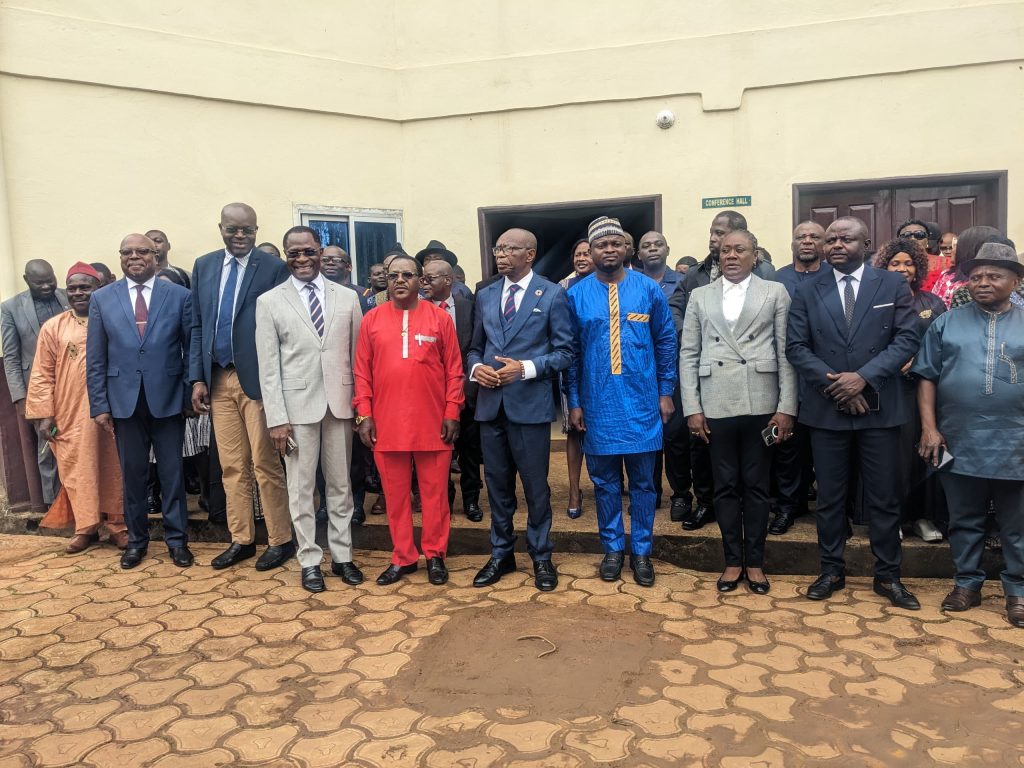
The National Anti-Corruption Commission (CONAC) has launched a three-day workshop in Bamenda aimed at evaluating the implementation of the 2025 Regional Anti-Corruption Action Plan for the North West Region and developing a strategic roadmap for 2026.
The workshop, which runs from June 10 to 12, is part of the implementation of Cameroon’s National Anti-Corruption Strategy (SNLCC) and seeks to strengthen efforts to combat corruption through improved monitoring, evaluation, and planning.
Presiding over the opening ceremony, the Governor of the North West Region, Adolphe Lele L’Afrique, reaffirmed the government’s commitment to fighting corruption, describing it as a major threat to development and good governance.”The fight against corruption is a major preoccupation of the Head of State, President Paul Biya,” Governor Lele L’Afrique stated.
He noted that practices such as fraud, nepotism, favoritism, and the embezzlement of public funds continue to undermine public confidence in institutions and tarnish the image of the nation.
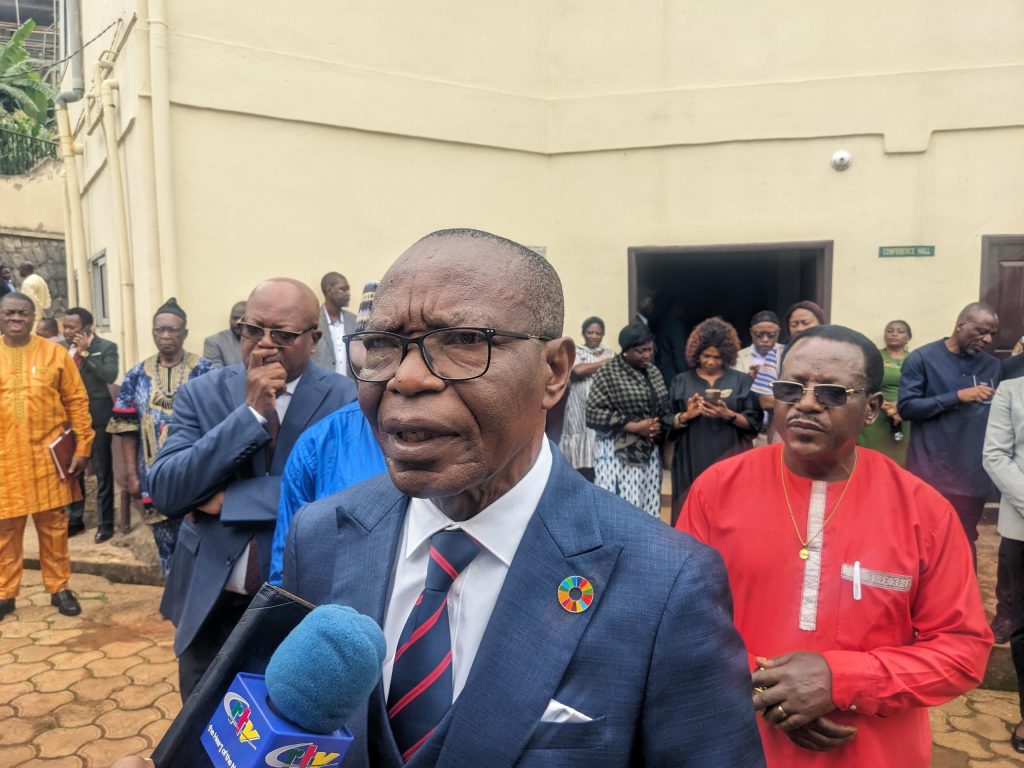
According to the Governor, corruption remains a significant obstacle to the socio-economic development of both the North West Region and Cameroon as a whole. He called on all stakeholders to intensify efforts to eradicate the phenomenon.
“Corruption undermines the development of our Region in particular and our country in general. The North West Region must be committed and determined to fight against this menace,” he said.
The Governor further explained that the workshop falls within the framework of the National Anti-Corruption Strategy, which outlines the responsibilities of stakeholders, identifies integrity-based actions, and establishes mechanisms for monitoring and evaluating anti-corruption initiatives.
He urged participants to actively contribute to the evaluation process in order to ensure the successful implementation of future anti-corruption measures.
Representing the Chairman of CONAC, Reverend Dr. Dieudonné Massi Gams, Christian Leke Achaleke, Member of the Coordination Committee of the National Anti-Corruption Commission, described the workshop as an important governance mechanism capable of driving positive change.

“Today, no one can deny the fact that corruption hinders development and has deprived this Region of some of its rich potential. That is why we must join forces to fight this cankerworm,” Achaleke said.
He stressed the need for all stakeholders to approach the exercise with transparency, accountability, integrity, and a strong sense of civic responsibility.
Achaleke recalled that Cameroon’s National Anti-Corruption Strategy, adopted in 2010, is built around the Precis model—Prevention, Education, Conditions, Incentives and Sanctions—which serves as the foundation for the development, implementation and evaluation of regional anti-corruption action plans.
Reviewing previous performances, he disclosed that the evaluation of the North West Region’s 2022 Anti-Corruption Action Plan recorded an execution rate of 21.61 percent, a slight improvement from the 20.10 percent registered in 2021. Despite the progress, the region ranked tenth nationally during both evaluation periods.
He explained that assessments for 2023 and 2024 were suspended due to the revision of the National Anti-Corruption Strategy covering the period 2022 to 2026.
Expressing optimism ahead of the current evaluation, Achaleke said CONAC expects improved results from the assessment of the 2025 Action Plan. He also acknowledged efforts made by several administrative officials in the region to curb corruption within their respective services, noting that CONAC has received positive feedback from citizens through its toll-free number, 1517, regarding improvements made following reports of corrupt practices.
The three-day workshop is expected to conclude with a comprehensive assessment of anti-corruption efforts undertaken in the North West Region during 2025 and the adoption of a new action plan for 2026 aimed at strengthening transparency, accountability and integrity in public administration.
Participants are also expected to formulate practical recommendations that will enhance the region’s contribution to the national fight against corruption and improve its performance in future evaluations.
